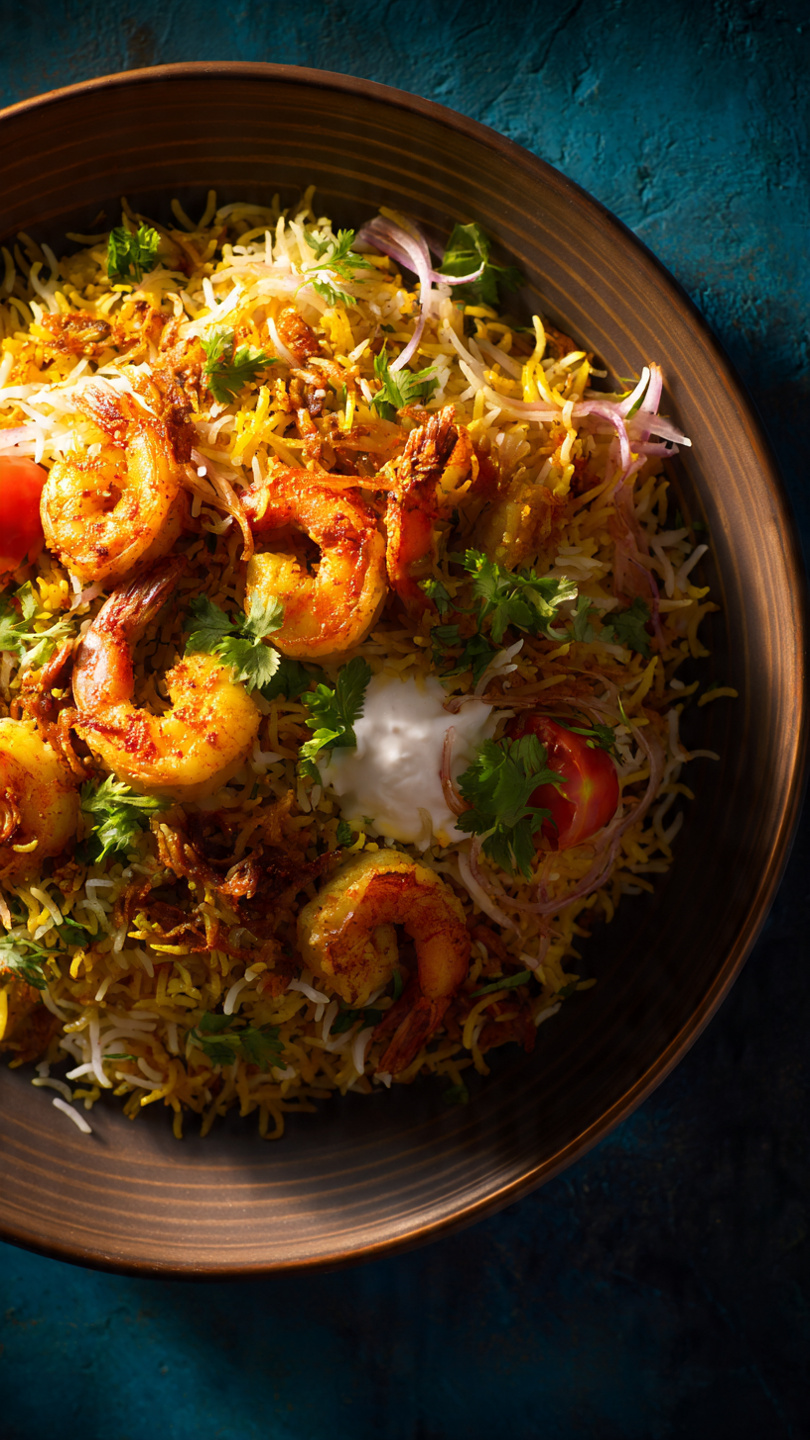
Shrimp Biryani (Easy Seafood Biryani Recipe)
This easy shrimp biryani is a fragrant, flavor-packed seafood biryani recipe layered with tender king prawns, aromatic basmati rice, and warming Indian spices. Ready in under an hour and absolutely irresistible.

The Seafood Biryani You Will Make on Repeat
If you have ever wanted to bring the magic of a restaurant-quality Indian shrimp biryani into your own kitchen, this is the recipe that will get you there. We are talking layers of fluffy, saffron-kissed basmati rice, plump king prawns steeped in a deep and fragrant masala, and caramelized onions woven through every bite. It is the kind of dish that makes your whole home smell incredible.
This easy shrimp biryani skips the intimidation factor without cutting any corners on flavor. Whether you know it as a prawn biryani recipe, seafood biryani, or Indian shrimp fried rice by another name, the soul of this dish is the same: patience layered with spice, and spice layered with love.
Why Shrimp Is the Secret Star of Biryani
Traditional biryani is most often made with chicken or lamb, but a well-made seafood biryani recipe is something truly special. Shrimp absorbs marinade deeply and quickly, meaning you get all that fragrant yogurt and spice flavor right into the protein in under 20 minutes. King prawns, in particular, stay juicy and sweet against the warming backdrop of cardamom, cloves, and Kashmiri chili.
The key difference with an easy shrimp biryani compared to a meat version is cook time. Shrimp are delicate. They need just a few minutes in the masala before the dum (slow-steam) step finishes them gently. Overcooked shrimp are the only real pitfall here, and this recipe will show you exactly how to avoid them.
Chef's Tip: Marinate your shrimp for at least 15 minutes, but no longer than 30. The acid in the yogurt and lemon juice will start to break down the shrimp texture if left too long.
The Ingredients That Make It Special
Good biryani does not require hard-to-find ingredients, but a few key items genuinely elevate the final dish. Long-grain aged basmati rice is non-negotiable for those gorgeous separate, fluffy grains. Ghee adds a nutty richness that butter cannot quite replicate. And a pinch of real saffron steeped in warm milk creates that iconic golden hue across the top layer.
Using the right pot matters just as much as the ingredients themselves. A heavy Dutch oven or a thick-bottomed stockpot retains heat evenly during the dum cook, which is what gives you perfectly steamed rice without burning the bottom.
Having the right spices on hand, measured and ready before you start, makes the whole process feel effortless. Good prep is the real secret to this recipe.
How to Parboil Rice for Biryani (and Why It Matters)
The technique that separates a great biryani from a good one is parboiling the rice to exactly 70 percent doneness before layering. This sounds precise, and it is. You want the rice grains to have some resistance in the center, almost like al dente pasta, when you drain them.
Here is what to watch for:
- At 4 minutes: Rice is too firm, chalky all the way through. Not ready.
- At 5 to 6 minutes: Rice bends slightly, the outer layer is soft, but the very center still has a white dot. This is perfect.
- At 8 minutes: Rice is too soft. It will turn mushy during dum cooking.
Drain the rice immediately into a colander the moment it hits that sweet spot. Spread it loosely if you have time; you do not want it steaming in its own heat while you finish the masala.
Warning: Never walk away from parboiling rice. The window between perfectly parboiled and overcooked is only about 90 seconds.
Building a Masala That Carries the Whole Dish
The masala base for this easy shrimp biryani recipe is built in stages, and each stage matters. The onions go in first and cook low and slow until they are genuinely golden, not just softened. Caramelized onions are the backbone of the dish's sweetness and depth.
From there, the garlic and ginger bloom in the fat for just a minute before the tomatoes go in. Cook the tomatoes until the oil visibly separates around the edges of the pan. This is a classic Indian cooking cue called bhunao, and it tells you the raw flavor of the spices has cooked out and the masala is ready for the shrimp.
The shrimp go in last, cook for just 3 to 4 minutes, and then the whole pot gets layered and sealed. Simple, effective, and incredibly satisfying.
Ready to bring it all together? Here is the complete step-by-step recipe:
Shrimp Biryani (Easy Seafood Biryani Recipe)
This easy shrimp biryani is a fragrant, flavor-packed seafood biryani recipe layered with tender king prawns, aromatic basmati rice, and warming Indian spices. Ready in under an hour and absolutely irresistible.
Ingredients
- 2 cups basmati rice, rinsed and soaked for 20 minutes
- 1 lb large shrimp or king prawns, peeled and deveined
- 1/2 cup plain whole-milk yogurt, room temperature
- 3 tbsp ghee or unsalted butter
- 2 tbsp neutral oil, such as vegetable or avocado oil
- 2 large yellow onion, thinly sliced
- 2 Roma tomatoes, finely chopped
- 5 cloves garlic, minced
- 1 tbsp fresh ginger, grated
- 1/2 cup fresh cilantro, roughly chopped, plus more for garnish
- 1/4 cup fresh mint leaves, roughly chopped
- 2 tsp biryani masala or garam masala
- 1 tsp ground cumin
- 1 tsp ground coriander
- 1 tsp Kashmiri red chili powder, reduce to 0.5 tsp for mild heat
- 1/2 tsp ground turmeric
- 4 whole green cardamom pods, lightly crushed
- 4 whole cloves
- 1 cinnamon stick, roughly 2 inches
- 2 bay leaves
- 1/4 tsp saffron threads, steeped in 3 tbsp warm milk for 10 minutes
- 3 tbsp warm whole milk, for saffron
- 2 tbsp lemon juice, freshly squeezed
- 1 1/2 tsp salt, or to taste, divided
- 4 cups water, for parboiling rice
- 1/2 cup fried onions, store-bought crispy fried onions, for garnish
Instruction
Steep the saffron: Add saffron threads to 3 tablespoons of warm milk and set aside for at least 10 minutes.
Marinate the shrimp: In a bowl, combine the shrimp with yogurt, half the garam masala, turmeric, half the Kashmiri chili powder, lemon juice, and 0.5 teaspoon of salt. Toss well and let it sit while you prepare everything else, at least 15 minutes.
Parboil the rice: Bring 4 cups of water to a rolling boil in a large pot. Add 1 teaspoon of salt, the bay leaves, 2 cardamom pods, 2 cloves, and the cinnamon stick. Add the soaked and drained basmati rice and cook for exactly 5 to 6 minutes. The rice should be about 70 percent cooked with a firm bite in the center. Drain immediately and set aside.
Fry the onions: Heat the oil and 2 tablespoons of ghee in a heavy-bottomed pot or Dutch oven over medium-high heat. Add the sliced onions and cook, stirring occasionally, for 12 to 15 minutes until deeply golden and caramelized. Remove half the onions and set them aside for layering.
Build the masala: To the remaining onions in the pot, add the remaining cardamom pods and cloves. Stir in the garlic and ginger and cook for 1 to 2 minutes until fragrant. Add the tomatoes, remaining chili powder, ground cumin, ground coriander, and the rest of the garam masala. Cook, stirring frequently, for 5 to 6 minutes until the tomatoes break down and the oil begins to separate from the masala.
Cook the shrimp: Add the marinated shrimp to the pot. Stir to coat in the masala and cook over medium heat for just 3 to 4 minutes. The shrimp should be barely pink. They will finish cooking during the dum (steaming) step, so do not overcook them here. Stir in half the fresh cilantro and mint. Taste and adjust salt.
Layer the biryani: Spread the shrimp masala evenly across the bottom of the pot. Spoon the parboiled rice evenly over the top. Scatter the reserved caramelized onions, remaining cilantro, and remaining mint over the rice. Drizzle the saffron milk across the rice in a few streams. Dot the top with the remaining 1 tablespoon of ghee.
Dum cook (seal and steam): Cover the pot tightly with a lid. If your lid is not tight-fitting, seal it with a layer of aluminum foil before placing the lid on top. Cook over high heat for 3 minutes, then reduce to the lowest heat possible and cook for 12 to 15 minutes. Turn off the heat and let the biryani rest undisturbed for 5 minutes.
Serve: Gently fluff and mix the layers with a large spoon or rice paddle so each serving has both rice and shrimp masala. Garnish with crispy fried onions and extra fresh cilantro. Serve immediately with raita and lemon wedges.
Equipment
- Large heavy-bottomed pot or Dutch oven with tight-fitting lid
- Separate large pot for parboiling rice
- Fine mesh strainer or colander
- Mixing bowls
- Sharp knife and cutting board
- Aluminum foil
Notes
Serving, Storing, and Making It Your Own
This prawn biryani recipe is a meal all on its own, but a cool, creamy cucumber raita on the side is practically mandatory in our kitchen. The contrast of cold yogurt against the warm, spiced rice is one of those combinations that just makes sense.
Want to mix it up? Here are a few variations worth trying:
- Instant Pot shrimp biryani: Use the Saute function for the masala, add parboiled rice, and pressure cook on High for 5 minutes with a 10-minute natural release.
- Coconut milk twist: Swap 0.25 cup of the cooking liquid for full-fat coconut milk in the masala for a subtle coastal Indian flavor.
- Vegetable additions: Stir in a handful of frozen peas or thinly sliced bell pepper with the shrimp for extra color and texture.
Leftovers reheat beautifully in a covered skillet with a tiny splash of water over low heat. The flavors deepen overnight, so do not be surprised if the second day tastes even better than the first.