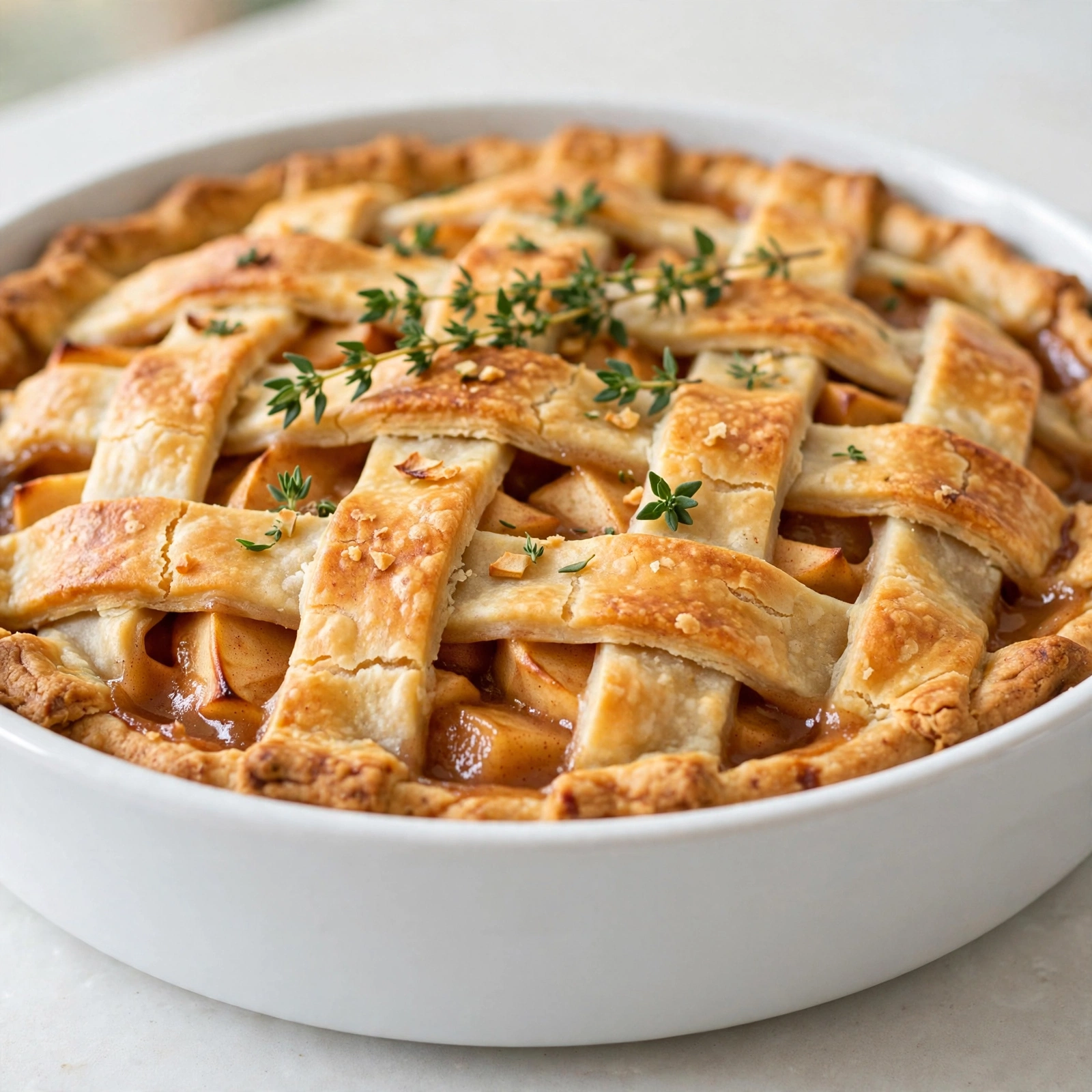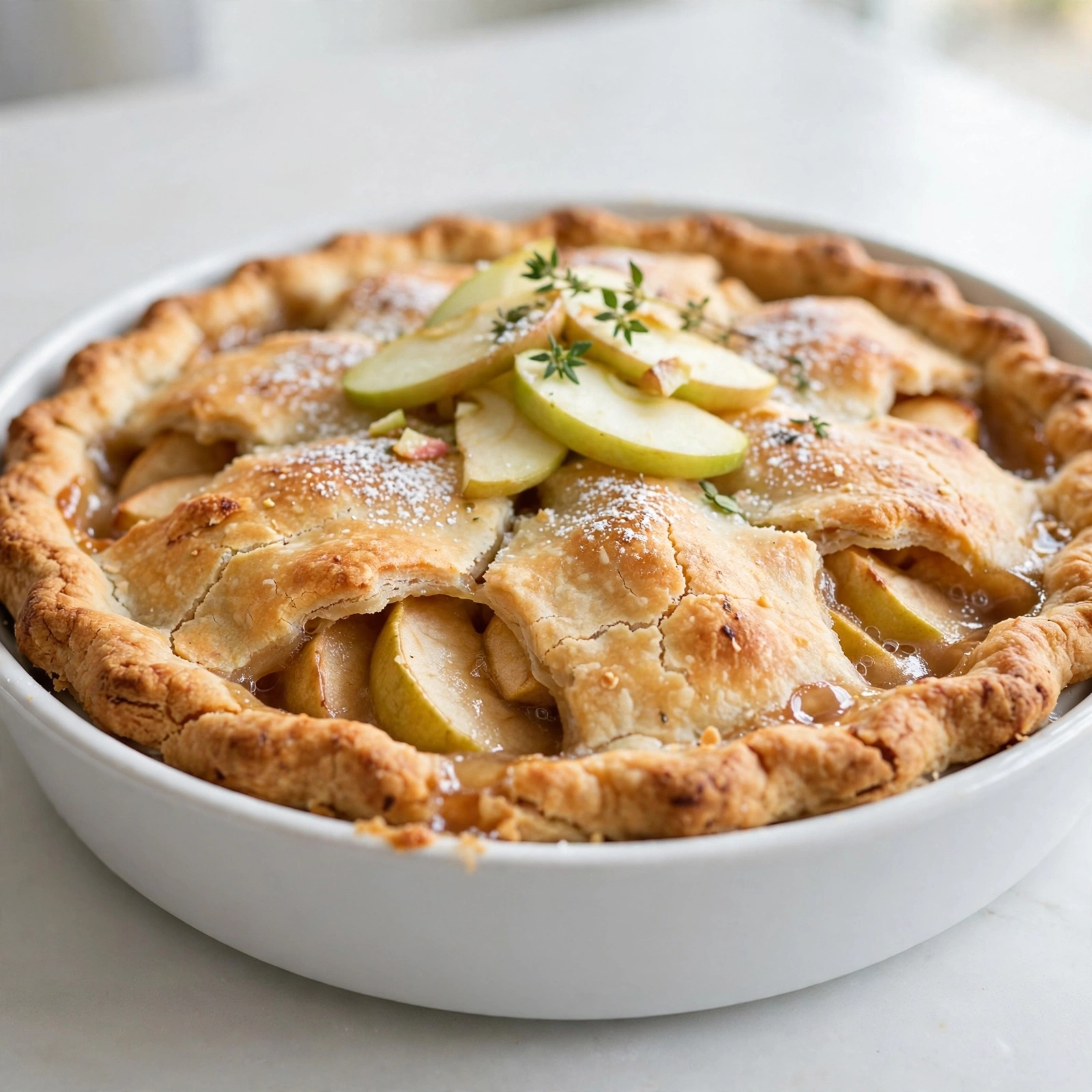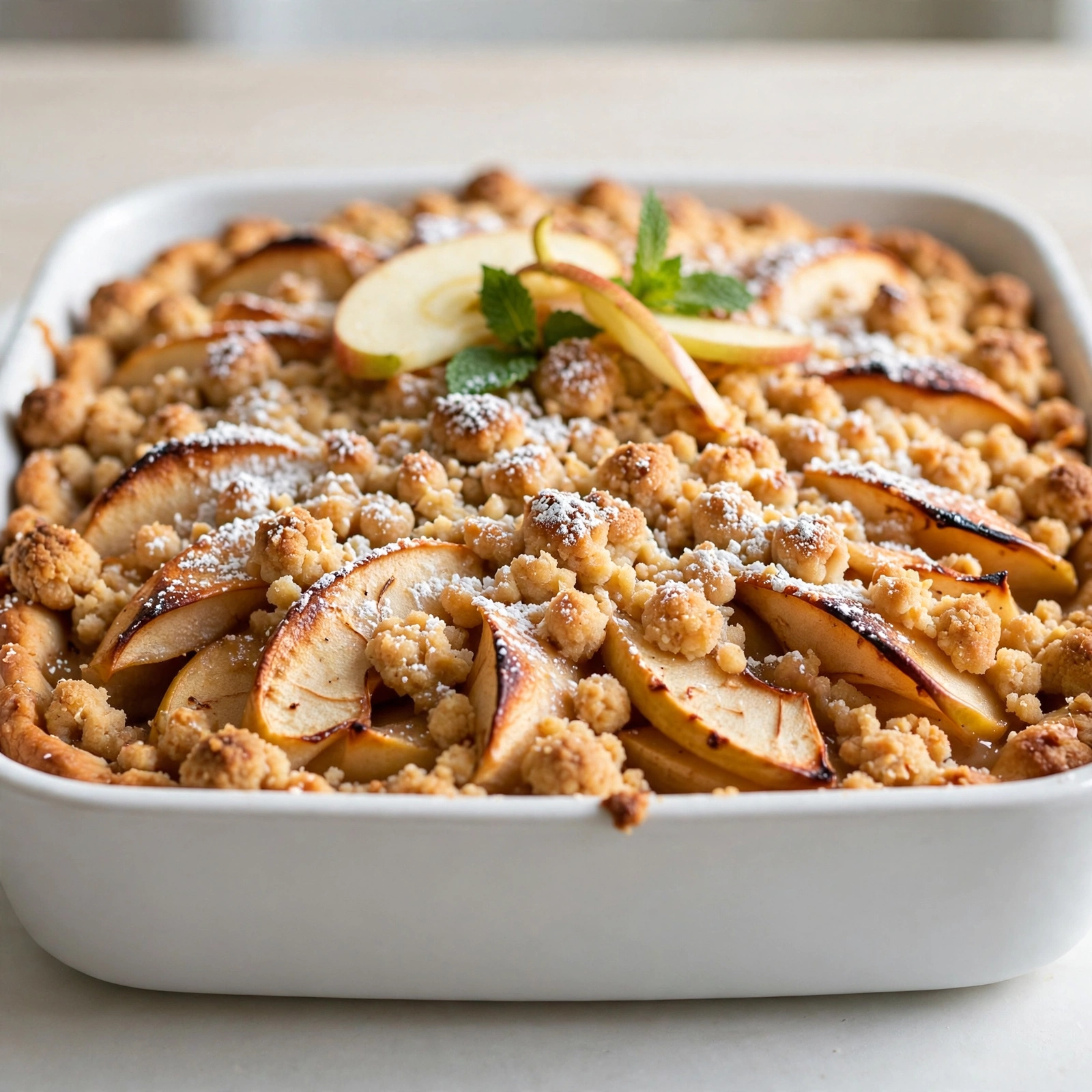
German Apple Pie (Versunkener Apfelkuchen)
This German apple pie features a buttery shortbread crust topped with tender, cinnamon-kissed apples that sink slightly as they bake, creating a rustic, amazing apple pie perfect with cream.

A Slice of Bavaria in Every Bite
There's something wonderfully honest about a German apple pie. Unlike the tall, lattice topped versions you might picture from an American bakery, this one, known as Versunkener Apfelkuchen or 'sunken apple cake,' has a shallow shortbread base with halved apples pressed right into the dough. As it bakes, the apples soften and settle into the crust, creating little golden pockets around each slice. It's rustic, it's simple, and it might just be the most amazing apple pie you make all season.
If you've been searching for fancy apple pie crust designs or elaborate pie topping ideas, this recipe takes a different, more relaxed approach. The beauty here isn't in intricate lattice work. It's in the fan shaped apple halves themselves, which naturally create a gorgeous, scalloped pattern across the top with almost no effort.
Before we get cooking, the right tools and ingredients make a real difference here. A good springform pan ensures clean release without disturbing that delicate sunken apple pattern, and a sharp paring knife makes scoring the apples quick and precise. These are the products that genuinely help this recipe shine:
Why This Recipe Works
The magic of this pie comes from contrast. The base is closer to a shortbread cookie than a traditional pie crust, sturdy enough to hold the apples but tender enough to melt in your mouth. Meanwhile, the apples themselves stay slightly firm at the edges while turning soft and jammy where they meet the dough.
- The shortbread base is quick to make with no rolling pin required.
- Halved, scored apples fan out beautifully as they bake.
- A light dusting of cinnamon sugar caramelizes into a delicate crust on top.
- Sliced almonds add crunch and a lovely nutty aroma.
Chef's Tip: When scoring the apple halves, cut about halfway through the flesh in a fan pattern. This is what allows the apples to spread slightly as they bake, giving you that classic sunken, scalloped look without any decorative pastry work.
Choosing and Prepping Your Apples
For the best texture, reach for firmer baking apples like Granny Smith, Braeburn, or Honeycrisp. Softer varieties can turn mushy and lose their shape once baked, which works against the pie's signature sunken look. Toss your peeled and cored apple halves in a splash of lemon juice right after cutting. This keeps them from browning while you prep the dough, and it adds a subtle brightness that balances the sweetness of the crust.
If you love the idea of an apple pie with cream, this recipe pairs especially well with a dollop of lightly whipped cream or a scoop of vanilla ice cream. The slight tartness of the apples against cool, sweet cream is a combination that never disappoints.
Bringing It All Together
Once your dough is pressed into the pan and your apples are fanned out on top, this pie practically bakes itself. There's no blind baking, no crimping, and no fussing over decorative edges. Ready to make it? Here is the full step by step recipe:
German Apple Pie (Versunkener Apfelkuchen)
This German apple pie features a buttery shortbread crust topped with tender, cinnamon-kissed apples that sink slightly as they bake, creating a rustic, amazing apple pie perfect with cream.
Ingredients
- 2 cups all-purpose flour, plus extra for dusting
- 1/2 cup granulated sugar, divided
- 2 tsp baking powder
- 1/4 tsp salt
- 1/2 cup unsalted butter, cold, cubed
- 1 large egg, room temperature
- 1 tsp vanilla extract
- 6 apples, peeled, cored, and halved (Granny Smith or Braeburn work well)
- 1 tbsp lemon juice, to prevent browning
- 1 tsp ground cinnamon
- 1/4 cup sliced almonds, optional, for topping
- 1 tbsp powdered sugar, for dusting, optional
Instruction
Preheat the oven to 350 degrees F (175 degrees C). Grease and flour a 9 or 10-inch springform pan.
In a large bowl, whisk together the flour, 1/4 cup of the sugar, baking powder, and salt.
Add the cold, cubed butter and use your fingers or a pastry cutter to work it into the flour until the mixture resembles coarse crumbs.
Add the egg and vanilla extract, then mix until the dough just comes together. It will be soft and slightly sticky.
Press the dough evenly into the bottom of the prepared pan and about 1 inch up the sides to form a shallow crust.
Toss the apple halves with lemon juice to prevent browning, then score the rounded side of each half in a fan pattern with a sharp knife, cutting about halfway through.
Arrange the apple halves cut-side down on top of the dough, pressing gently so they sink slightly into the crust.
Sprinkle the remaining sugar and the cinnamon evenly over the apples.
Scatter the sliced almonds over the top if using.
Bake for 40 to 45 minutes, until the crust is golden and the apples are tender when pierced with a knife.
Let the pie cool in the pan for at least 20 minutes before releasing the springform sides.
Dust with powdered sugar just before serving, if desired.
Equipment
- 9 or 10-inch springform pan
- Large mixing bowl
- Pastry cutter or fork
- Sharp paring knife
- Whisk
Notes
Serving, Storing, and Fun Variations
This pie is lovely served slightly warm, with the crust still a touch soft, or fully cooled, when the base firms up into something closer to a buttery cookie crust. Either way, a light dusting of powdered sugar just before serving gives it a simple, elegant finish that feels fancier than the effort it took to make.
If you're bringing this to a bake sale or a pie auction, it holds up remarkably well at room temperature and travels better than most fruit pies thanks to its shallow, sturdy structure. It's also an easy answer if you're brainstorming pie auction ideas that stand out without requiring hours of decorative pastry work.
For a fun twist, try swapping the almonds for chopped hazelnuts, or add a handful of raisins soaked in rum between the apple halves for a slightly boozy, old world flavor. You could even experiment with an apple pie with shortbread crust variation by adding a touch of almond extract to the dough for extra warmth.
However you serve it, this German apple pie proves that dessert pies don't need elaborate crust designs to be memorable. Sometimes the simplest, most honest bake is the one everyone asks for again and again.